This cutting-edge charging station delivers a formidable 32 amps, translating to a charge rate of approximately 25 miles per hour.
The USA made LineGard EVSE2 incorporates North Shore Safety’s GFCI (ground fault circuit interrupter) Class C industrial level GFCI protection technology. It is designed to meet and exceed the rigorous requirements of the National Electrical Code (NEC) and provides homeowners with a safe, efficient way to charge electric vehicles that is compatible with all popular EVs. The use of a J1772 to NACS adapter is required for Tesla vehicles.
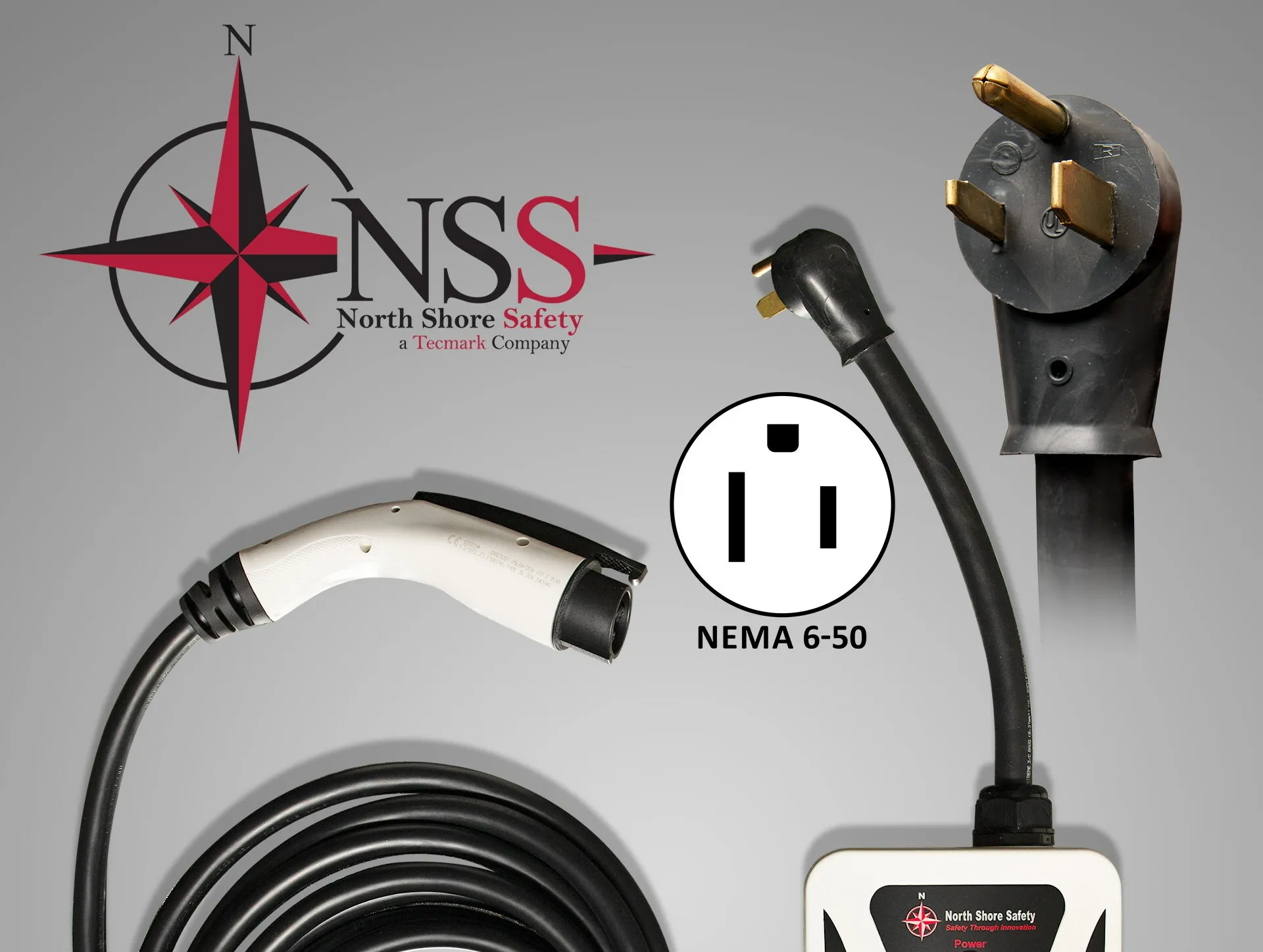
Encased in a robust NEMA 3R rated enclosure, the LineGard EVSE2 is designed to withstand diverse environmental elements, ensuring reliability and longevity. Its sleek and modern design facilitates a straightforward and swift installation process, utilising a standard NEMA 6-50 plug, commonly found in dryer outlets.
The new home charging station is engineered to deliver the most advanced safeguard against electrical shocks, a paramount feature, especially in damp locations such as garages and outdoor carports. This protection is critical since the integration of a GFCI has been a NEC Code requirement under Article 625 (protection against shock of personnel) for safe EV charging since 1996.
A GFCI helps prevent electric shock by cutting off power if it detects a ground fault, which is a potential risk in moist environments like garages. As EV charging involves high currents for extended periods, a GFCI ensures protection against electrical hazards, thereby safeguarding homeowners, their property, and the EV's battery system. This critical safety device also provides peace of mind by preventing costly damages and it contributes to the long-term reliability of the charging infrastructure.
North Shore Safety was instrumental in the design and manufacturing process of Tesla's initial Level 2 charging station for its first production EV, the Roadster, to make it comply with US safety standards. Since then, over the last decade, the company has produced numerous private labelled level 2 charging stations throughout the US, Europe, and Japan. The LineGard EVSE2 for residential use builds on this legacy.